
Table of Contents
Kannada Rajyotsava 2026: Karnataka’s History, Culture and 71st State Formation Day
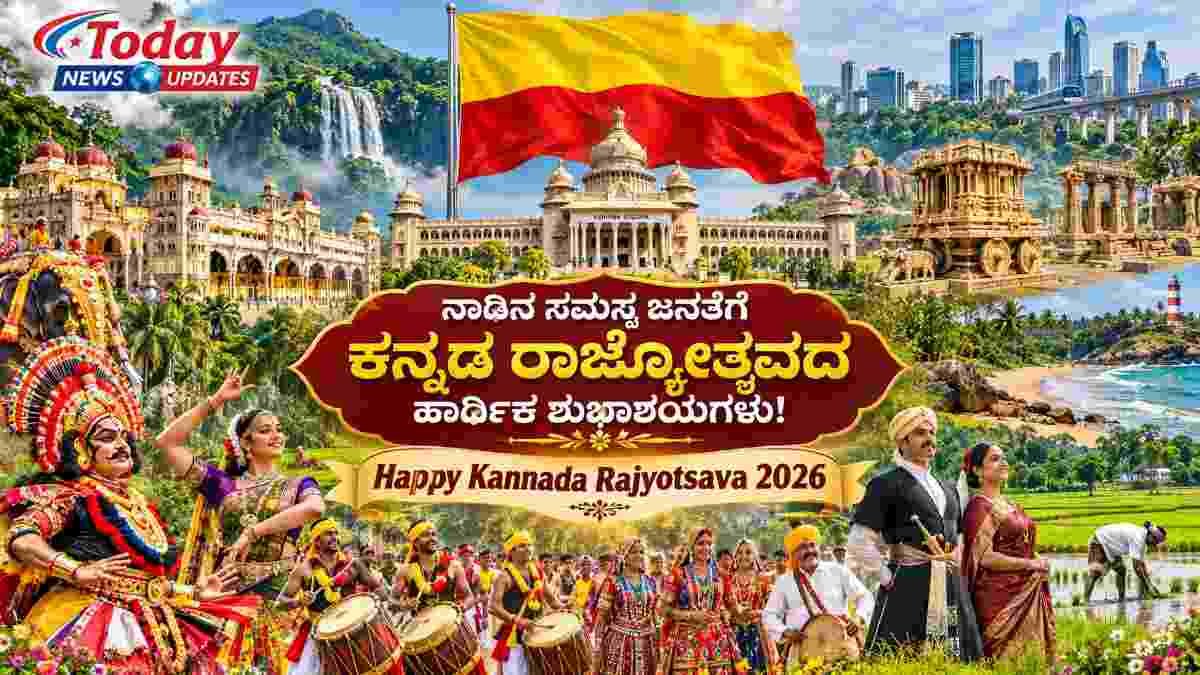
Across Karnataka, November 1 carries a feeling that is difficult to describe in just a few words. Yellow and red flags appear on streets, Kannada songs fill public spaces, cultural programmes bring communities together, and people remember the generations who worked for the unity of Kannada-speaking regions. Kannada Rajyotsava 2026 is being celebrated today, November 1, marking the state’s 71st Formation Day observance and commemorating the historic unification of Kannada-speaking areas in 1956.
For Kannadigas, this is more than a date on the calendar. It is a day to celebrate a shared language, a diverse heritage and a cultural identity that connects people from different parts of the state and across the world.
Kannada Rajyotsava 2026: The History Behind November 1
How Karnataka Came Together in 1956
Before the reorganisation of Indian states, Kannada-speaking communities were spread across several administrative regions. Parts of present-day Karnataka were governed by the former princely state of Mysore, while other Kannada-speaking areas came under the Bombay Presidency, Madras Presidency, Hyderabad State and Coorg.
This division meant that people who shared a language and cultural connections lived under different administrations. The demand to bring these regions together became an important public movement. Leaders, writers and Kannada organisations contributed to the cause of unification, often referred to as the Karnataka Ekikarana movement.

On November 1, 1956, following the States Reorganisation Act, Kannada-speaking regions were brought together to form the enlarged Mysore State. This is the historical event remembered every year as Karnataka Rajyotsava.
Why Was Mysore State Renamed Karnataka?
The name Mysore continued for several years after the 1956 reorganisation. However, the name did not fully represent the wider Kannada-speaking region that had become part of the state.
On November 1, 1973, the state was officially renamed Karnataka under Chief Minister D. Devaraj Urs. The change gave the unified region a name that represented its broader identity and historical connections.
That is why November 1 has a double significance: it marks the 1956 unification and the 1973 renaming. The 2026 observance is the 71st since the state’s formation, while the year also marks 70 years since the 1956 reorganisation.
The People Who Strengthened the Kannada Unification Movement
The journey towards unification was shaped by many people who believed that Kannada-speaking regions should come together. Aluru Venkata Rao is widely remembered for his contribution to the Karnataka unification movement. Writers, journalists, scholars and public organisations also helped build awareness and support for the cause.
Their efforts remind today’s generation that a shared identity was built through years of public participation, cultural work and determination. Remembering this history is an important part of celebrating Kannada Rajyotsava.
Karnataka’s Cultural Diversity: One State, Many Traditions
North Karnataka: Folk Arts, Food and Strong Regional Traditions
North Karnataka has a distinct cultural character, reflected in its language, food, music and folk performances. Jolada rotti, ennegayi, shenga chutney and other regional dishes are familiar parts of its food culture.
Folk traditions such as Dollu Kunitha and other community performances bring rhythm and energy to festivals and public celebrations. The region’s history, literature and local customs add an important dimension to Karnataka’s wider identity.
Coastal Karnataka: Yakshagana and the Beauty of the Coast
The coastal districts of Dakshina Kannada and Udupi are known for their distinctive traditions, temple heritage, cuisine and connection with the Arabian Sea.
Yakshagana is among the region’s best-known traditional performance forms. Its colourful costumes, expressive storytelling, music and dramatic presentation make it an important part of Karnataka’s performing arts heritage. Coastal food traditions, including neer dosa and regional seafood preparations, also reflect the area’s unique character.
Malnad and Kodagu: Forests, Hills and Living Traditions
The Malnad region is known for its Western Ghats landscapes, rainfall, coffee-growing areas and rich natural environment. Kodagu, popularly known as Coorg, has its own distinctive customs, festivals and food traditions.
The landscapes of these regions are not only important for tourism. Their forests, rivers and biodiversity are also closely connected with the state’s ecological wealth and the lives of local communities.
Bengaluru and Mysuru: Modern Growth Meets Heritage
Bengaluru represents Karnataka’s growing role in information technology, biotechnology, aerospace, startups and other modern industries. At the same time, the city has a long history of education, public institutions, arts and cultural activity.
Mysuru offers another side of the state’s identity through its royal heritage, palaces, Dasara traditions, crafts and classical arts. Together, these cities show how Karnataka’s historic character and modern ambitions can exist side by side.
Kannada Rajyotsava 2026: Today’s Celebrations and Current Developments
Statewide Programmes and the Main Celebration in Bengaluru
Kannada Rajyotsava is being observed across the state today with flag-hoisting ceremonies, cultural performances, processions and programmes celebrating Kannada language and heritage.
In Bengaluru, Chief Minister D. K. Shivakumar hoisted the national flag and the yellow-and-red Kannada flag at a state celebration organised by the Department of School Education and Literacy. He also reviewed a march past involving school contingents. The programme included floral tributes to Goddess Bhuvaneshwari at Vidhana Soudha.
The state is also recognising people who have made notable contributions in different fields through the Rajyotsava Awards. Akashvani News reported that 71 achievers are being honoured this year.
Rajyotsava Celebrations in Schools
This year, November 1 falls on a Sunday. However, Karnataka directed government, aided and unaided primary and high schools to organise Kannada Rajyotsava celebrations on the actual date.
The decision reflects the importance of introducing younger generations to the history of state formation, Kannada literature and regional traditions. School programmes provide children with an opportunity to participate through songs, speeches, cultural performances and activities.
Karnataka’s Contribution to India’s Future
Karnataka’s identity is not limited to its historical achievements. The state has an important place in India’s technology and innovation landscape, particularly through Bengaluru’s IT and startup ecosystem.
Information technology, biotechnology, aerospace, advanced manufacturing and emerging fields such as artificial intelligence are among the sectors associated with Karnataka’s modern growth. In his Rajyotsava greetings, Prime Minister Narendra Modi also highlighted the state’s traditions, achievements and contributions to futuristic sectors.
The challenge ahead is to ensure that development reaches different regions, supports farmers and local industries, creates opportunities for young people and protects the natural and cultural heritage that makes Karnataka distinctive.
The Meaning of the Red and Yellow Karnataka Flag
The familiar red-and-yellow flag has become a widely recognised symbol of Kannada identity and pride. It is seen during Rajyotsava celebrations, Kannada cultural programmes and public gatherings.
The colours are commonly associated with courage, energy, auspiciousness and cultural pride. The flag is an important symbol for many Kannadigas, although it should not be confused with India’s national flag or described as a constitutionally recognised official state flag.
For many people, seeing the red and yellow colours on November 1 brings back memories of school celebrations, Kannada songs, community gatherings and the pride of belonging to Karnataka.
A Kannada Rajyotsava Wish for Every Kannadiga
A state is built not only through its borders or institutions, but also through the people who preserve its language, respect its traditions and contribute to its future.
Whether someone comes from Bengaluru, Vijayapura, Belagavi, Kalaburagi, Mysuru, Mangaluru, Kodagu or any other part of Karnataka, the celebration carries a shared message: our regional differences make our culture richer, and our common identity brings us together.
Happy Kannada Rajyotsava 2026! May the Kannada language continue to flourish, may Karnataka’s rich traditions be passed on to future generations, and may our state move forward with unity, knowledge, opportunity and prosperity.
ಸಿರಿಗನ್ನಡಂ ಗೆಲ್ಗೆ, ಸಿರಿಗನ್ನಡಂ ಬಾಳ್ಗೆ!