
Table of Contents
With the rapid evolution of the current digital economy, users need to be informed about the most efficient payment methods available today. Discussing whether using UPI vs Credit Cards for daily spending is the right choice will help you make smart financial decisions as you move through your day-to-day activities. Considering how popular both payment methods will be in India in 2026, we will take a closer look at each of them and try to compare them based on their distinctive features.
Understanding UPI and Credit Cards
What is UPI?
UPI stands for Unified Payments Interface and refers to a convenient payment system where money is transferred from one bank account to another instantly. This feature has become very helpful since people no longer need to carry cash or cards with them for all transactions.
What are Credit Cards?
Credit Cards are an instrument that provides a user with access to some monetary resources they can use for making purchases. In return, the person needs to pay back everything they borrowed, along with some extra costs.
UPI vs Credit Cards for Daily Spending: Key Differences
Convenience and Accessibility
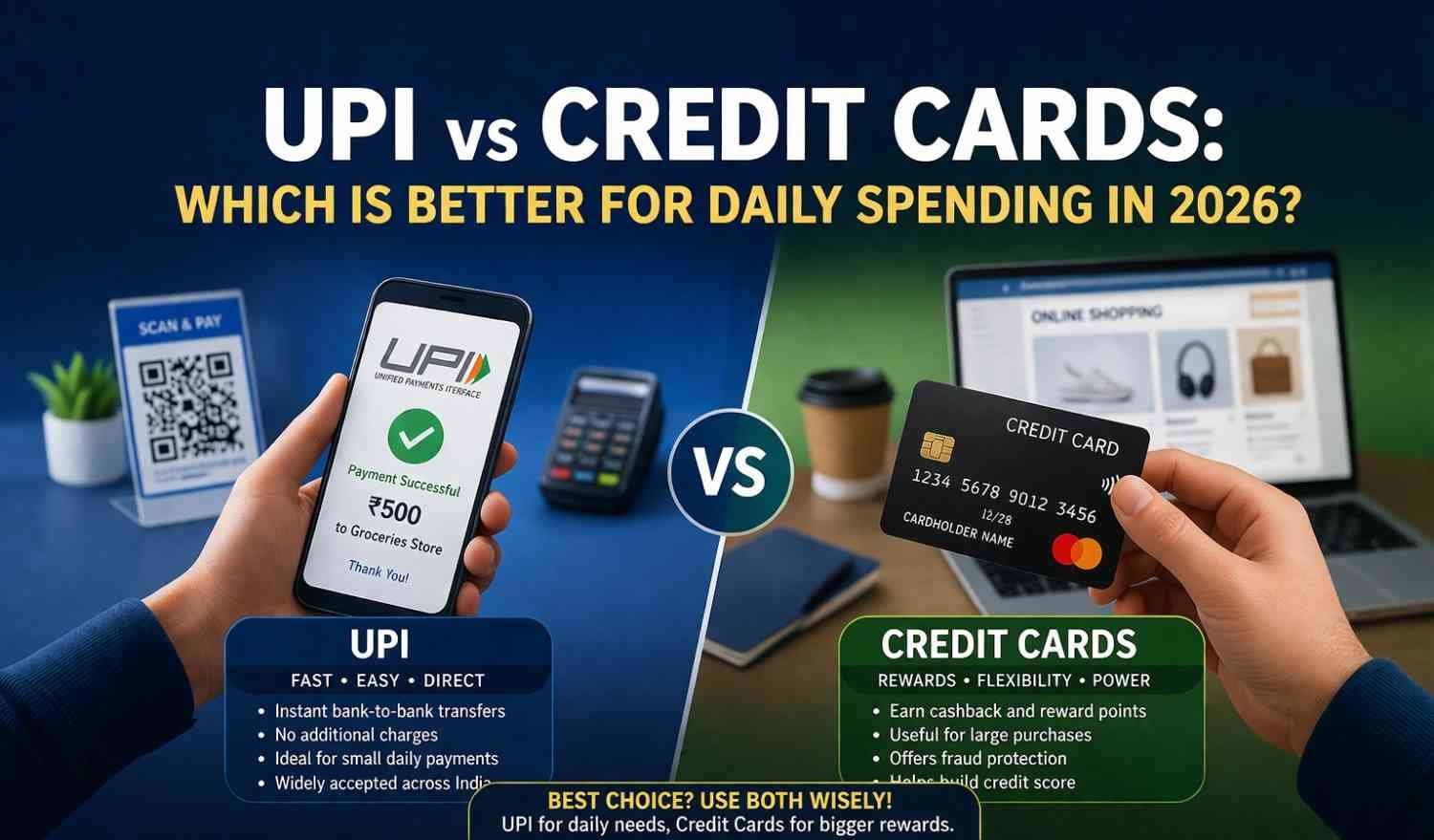
The main advantage of using UPI is the simplicity and convenience of payment, which makes it perfect for small purchases such as buying groceries or refuelling the car. However, when it comes to larger payments or online transactions, Credit Cards are the preferred choice.

Transaction Costs and Charges
- UPI is completely free to use
- Credit Cards are subject to annual fees, interest charges, and penalties
- Hidden charges can also occur if credit card payments are late
Rewards and Financial Benefits
While it seems that both payment methods are equal here, credit cards easily win the competition. Credit Cards provide the user with a lot of bonuses, such as cashback, rewards, and various special offers. UPI may sometimes have special offers as well, yet the benefits are usually not quite as significant.
Security and Spending Behaviour
Both payment methods are pretty safe. However, they operate in different ways and have distinct features:
- UPI uses password protection and alert notifications
- Credit Card provides a range of fraud protection services, including disputing and chargeback options
As for the spending behaviour, using UPI means that you can only spend the money currently stored in the bank account, whereas with Credit Cards, users can make purchases and postpone paying for them later.
Latest Trends in Digital Payments (2026)
Currently, we can notice that both systems are widely used in India. Digital transactions with the help of UPI exceed other payment methods. Still, the number of credit cards in circulation increases every year.
Which One Should You Choose?
There is no single answer to this question since your decision will heavily depend on your financial habits. If you have to make regular payments, then using UPI would be the best option for you. On the other hand, when you require more money for making a payment or wish to accumulate some rewards, you might choose a credit card.
Impact on Users and Businesses
Your choice will also have a great impact on your personal finance management, allowing you to plan your budget better. For businesses, the opportunity to accept payments via both methods will help them increase their sales.
Expert Insight
According to financial advisors, users can benefit from UPI when it comes to control and from credit cards when they plan to make large payments and earn some rewards.
In conclusion, when discussing UPI vs. credit cards for daily spending, we can see that both payment methods have their advantages and disadvantages. By using both instruments correctly, it will be possible to achieve maximum comfort and profitability.
Note: This material contains general information and does not represent financial advice.